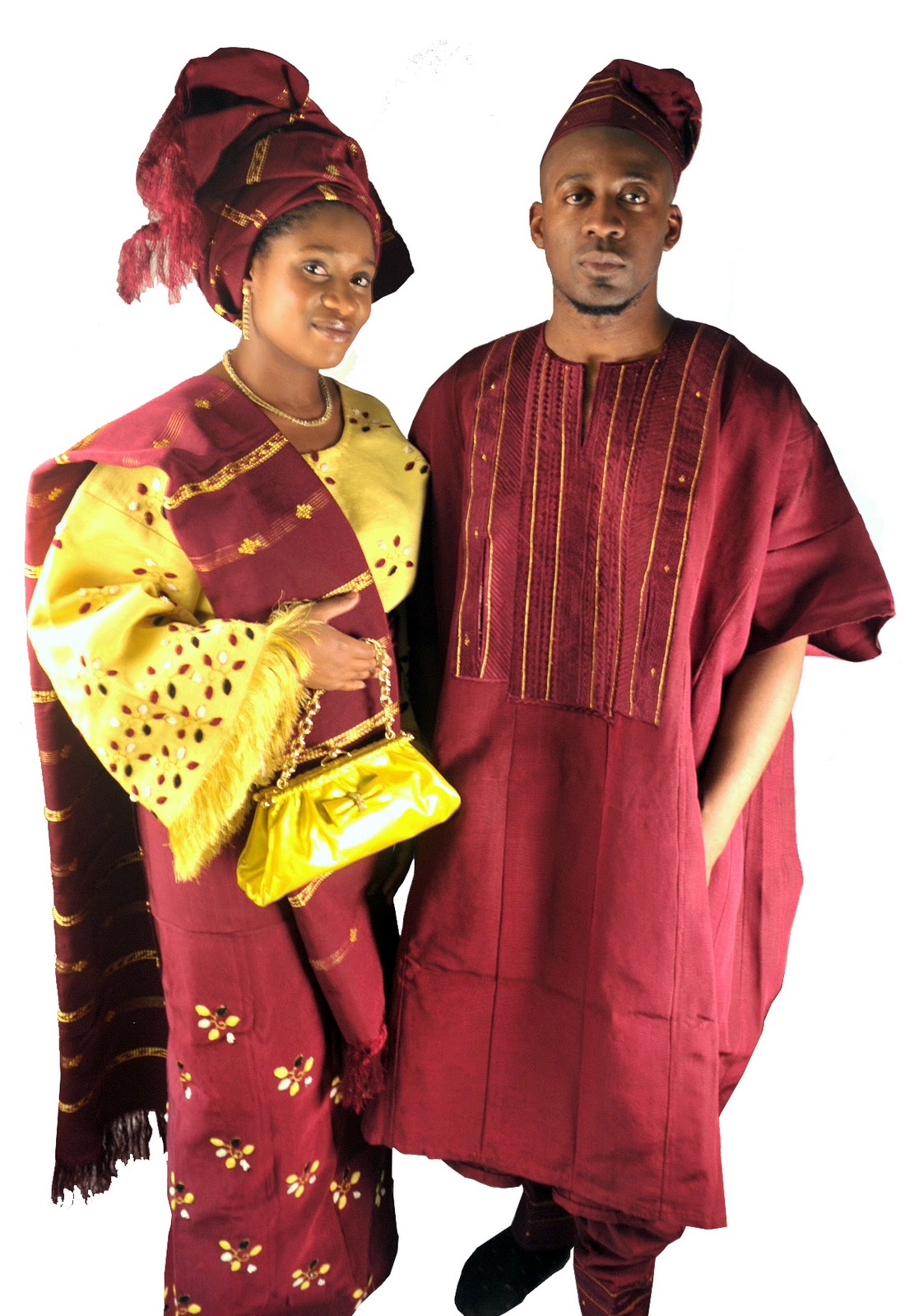
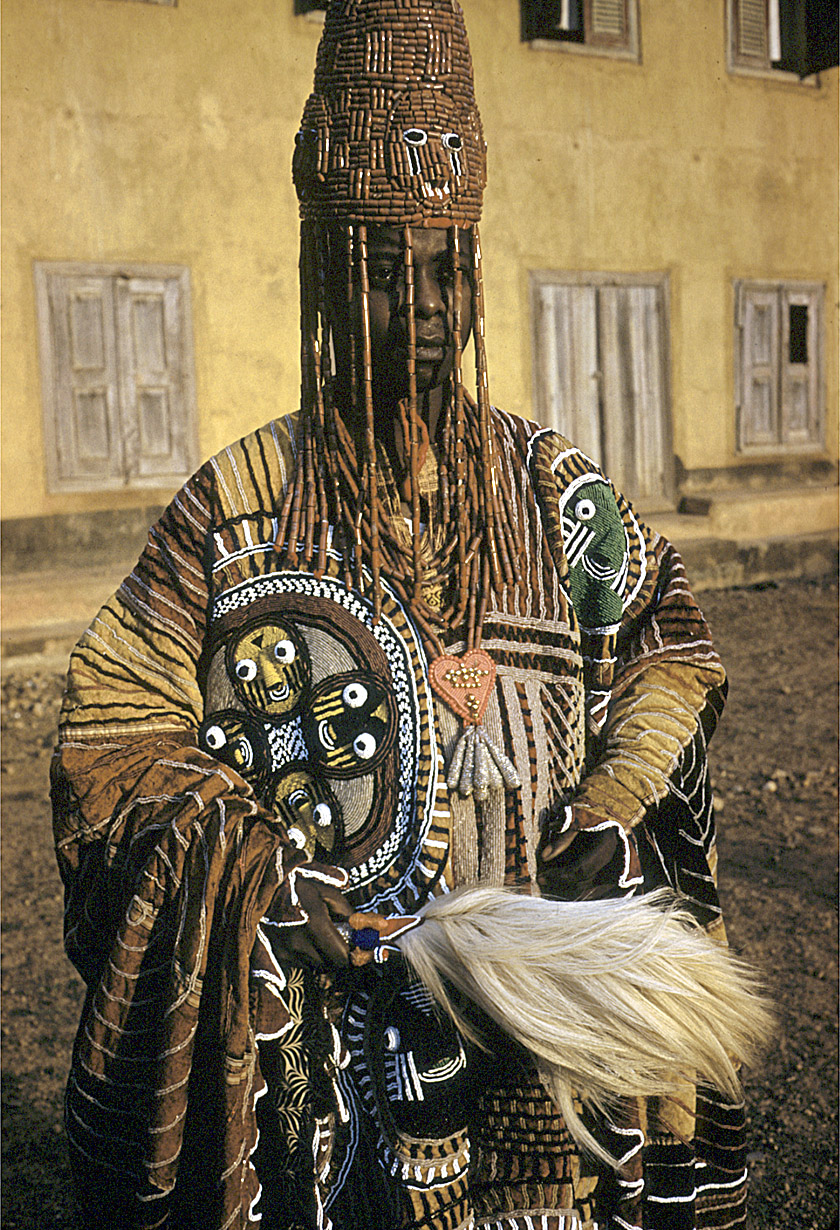
OLUWAYEMISI,OMO DUDU OLEWA!
[/caption]
OLUWAYEMISI,OMO OYO ALAFIN,IYA ANUOLUWAPO,OMO DUDU OLEWA!

OLUWAYEMISI,OMO DUDU OLEWA!
[/caption]
OLUWAYEMISI,OMO OYO ALAFIN,IYA ANUOLUWAPO,OMO DUDU OLEWA!
BLEACH,THE CHEMICALS WILL AFFECT YOU AND YOUR SKIN WILL NEVER BE THE SAME AGAIN!
[/caption]
IT IS CHEMICALS SO THE LONGER YOU USE THEM THE MORE THEY DAMAGE YOUR SKIN AND IN THE END GIVE YOU SKIN CANCER!
[/caption]
BE A MONSTER LIKE MICHAEL JACKSON IF YOU BLEACH!
From tyrashow.warnerbros.com
Dangers of Skin Bleaching
Shocking info on how bleaching can endanger your health.
Tyra has met women willing to do almost anything to lighten the color of their skin … including the use of bleach, despite the negative or harmful side effects. What’s really scary is that you can buy bleaching creams in stores across the country. While these creams are intended to be used on small spots to reduce scarring, as we saw on the show, some women slather creams over their entire bodies. But is the result worth the risk — even if the risk is cancer? Read on for the scary side effects of these controversial creams.
Mercury
Even small doses of Mercury can cause neurological damage. This concern is so great, Minnesota has outlawed cosmetics like skin lighteners that intentionally feature it. But some “mom and pop” shops carry creams with that contain extreme levels of such ingredients.
Hydroquinone
This component of many skin-bleaching techniques is also found in film developing products. (Note: Your body is a work of art, but should you treat it like a chemically processed photo in a darkroom? We think not!) The idea of using this ingredient didn’t sound good to the French, who banned it for fear of cancer risks.
Alpha Hydroxy Acids
These are most commonly found in facial chemical peels, which are better known as procedures reserved for serious and infrequent skin overhauls administered by professionals. These should not be in anything you use at home regularly.
Arsenic
Most people hear this word and immediately think “poison,” which is exactly what arsenic is. Not something you want to find on the list of ingredients in your face cream, but that might be the case with some skin lighteners.
Bleaching seems like a crazy idea, and I think it is, but before we look at the mothers and judge we should look at ourselves. white wemon get fake tans, that can cause cancer, they bleach their teeth, that kills the enammal. these bleaching girls are a reflection of our own society. bleaching is wrong, but so can the other beauty routiens. these mothers are emotinaly and physacally damaging their dark skined chindren, butthe bigger problom is why they are doing it. it is the parents job to teach their kids that they are beautiful, and that what makes a beautiful person is their heart and their head. we should take that episode as a sign that our society doesnt understand true beauty, and evey girl on this planet should see that and change. Posted by kiwu 01/19/09 11:22 AM
ok i understand why somebody would want to bleach, they don’t think they are pretty enough or beautiful. im a white teenage girl and i HATE the way i look!!! i will do anyting just to lose a little weight. and if i don’t lose any weight i feel like i’ve faild so i end up cutting my arms. but there is one thing that has helped me is know that everybody is beautiful in their own way!!!! Posted by Ashlee 01/19/09 10:59 AM
Oh my God…i am black from africa. i have light brown shade. my favourate colour is the dark black that shines …like the colour of the lady that was complaining. also some white people want to look darker by tanning. what is wrong with people…i do not think it is about colour it is about self esteem issue. and abhoring once’s colour is a symptom of it. god has given you health and beauty and we complain about the blessings of God… Posted by kifaah 01/19/09 10:01 AM
HEy. Does Bleaching the skin even work ???????? Like I think thats crazy…. If i get any bleach on my fingers it stings.. let alone on a childs whole body, thats outragous. awful. I thought black people stuck up for there race and really belived in it. This is crazy crazy crazy. Posted by Dont Understand 01/19/09 7:35 AM
I would have to agree with Stephanie about showing both sides of the spectrum as it is all harmful whether it be UV lights or chemicals from bleaching chemicals. You have people like me that think black is beauty from one shade to the next. Posted by Kara 01/19/09 7:15 AM
Hi Tyra! I saw the show on black women who bleach their skin. I have to tell you that I was shocked! I am a dark skin puertorican woman and I am overweight. I will tell you that when I look in the mirror I see the most beautiful woman I have ever seen. I’m proud of everything about me, including my skin color. These women are telling the world ‘I’m black, I’m minority, and I’m not worth much. What they dont understand is that we have to be proud of who we are no matter what size, color, shape and weight. If you dont deem yourself beautiful, nobody else will. One thing that i dont understand is the following’ black women are trying to be white (getting together with white men, straightening their hair, light colored contacts, and white women are trying to be black (curling the hair with perms, darkening the skin in tanning salons under the sun in the summertime and at tanning salons in the winter. Why cant we just love who we are and be the best we can be? I’m so sick of people not being happy with how god made them! Ramona Posted by Ramona 01/19/09 12:33 AM
I knew of skin bleaching before watching the show from having lived in the Arab world. I would like you all to visit AVRF.org to see the faces of children who have **involuntarily** gone from black to white. This skin disease is called Vitiligo, and it needs to be recognized. I think the women on the show should be happy that they are one color. God makes us the way we are for a reason. Please visit AVRF.org and educate yourselves!!
Posted by Jessica 01/18/09 8:37 PM
Well, I am a brown skin young lady and proud of it. I wouldn’t change my skin color for the world and this is the attitude the women who are trying to bleach their skin should have because they are all beautiful. Dark skinned women are beautiful african americans as well. I do agree that they should be represented more in the media and videos. Posted by Quinita 01/18/09 8:02 PM
Hi’ Tyra I watch your show every day and i saw the show about the black girl that was bleaching they body but they shouldn’t do it ,because black is beautiful and what count is the beauty of they heart so tell them that we love them very much the color don’t have anything to do with they color ok. and that does people out their they don’t have heart or feel to hurt black humam ok Thank you Diana Alicea Posted by Diana Alicea 01/18/09 5:50 PM
Tyra, I DVR’d your show on skin bleaching and as a white woman I was a little offended when your undercover reporter was shocked to find out the creams were only marketed in “black” areas. As a white woman I wanted to let you know that tanning booths, which have harmful UV rays, are only marketed in “white” areas and that the tanning creams that they promote are named things such as “caramel delight” and “sensual chocolate”. It would have made more sense to me if you had shown both spectrums of caucasions tanning and african americans bleaching. It’s all the same, we just want to be something we’re not, sad as that is. Posted by Stephanie 01/18/09 5:24 PM
TYRA I WATCHED THE SHOW AND WAS A LITTLE OFFENDED BECAUSE I AM A BEAUTIFUL DARK SKINNED WOMAN WITH SELF ESTEEM. ITS TRULY UNFORTUNATE THESE YOUNG LADIES TRULY LACK IN THIS AREA AND THAT’S TRULY WHAT THE BOTTOM LINE IS. ALSO I BELIEVE IF THESE YOUNG WOMEN RECEIVED POSITIVE AFFIRMATIONS AT HOME OF HOW BEAUTIFUL THEY ARE AND THAT TRUE BEAUTY IS FROM THE INSIDE OUT THIS WOULD NOT BE AN ISSUE FOR THEM. MY PRAYER FOR THEM IS THAT THEY GROW IN ENOUGH SELF LOVE AND ACCEPT THEMSELVES FOR WHO THEY ARE AND HOW GOD MADE THEM. Posted by WANDA 01/18/09 4:09 PM
PS- I think my saving grace is my personality . If i were’nt the way I am, Lord knows what I would’ve done to myself by now. Posted by MusiqJunkie16 01/18/09 4:05 PM
I understand where the women on the show were coming from . I am a 16 year old dark-skinned female, insecure about my looks . I have had numerous thoughts about wanting to bleach my skin, etc. in order to make my complexion lighter. I have had guys that look right past me and on to my light-skin, modelesque friends ; “Friends” that have secluded me because I didn’t look like the rest of the light-skin girls. Not to add to the fact that they are all tall, beautiful, and built to perfection. I on the other hand am about 5′3, dark, and over-developed. [ I hate the stares from older gentlemen. ] You can see the difference in treatment between us all and it a serious problem that must be handled . I have no one to talk to because I highly doubt anyone would know how to react or help me. The only reason why i have not went through with these things to lighten my complexion is health reasons. Of course I have my days where I am the Fiercest Feline in the Jungle, but most of the time I’d rather live my life dark-skinned and average rather than light-skin and on an early ride to death. Just thought I’d share my experiences =], ~MusiqJunkie Posted by MusiqJunkie16 01/18/09 4:03 PM
tyra your right this article just described my mom. she is willing to do anything to make her skin lighter. i have tried to convince her that its bad for her skin. i also tried telling her that she should be happy with the shade she is. i think its beautiful. but my mom doesnt seem to believe me and what i have to say what wouold you tell her? Posted by nisha patel 01/18/09 2:25 PM
I agree with Tyra when she said on the show that the darker skin women who want to bleach are the victims of our color struck racist society that never celebrates dark skin especially in the media. I notice that black sitcoms and movies from years ago used dark skin women as love interest paired with the black man – you rarely see that today. Its almost like a dark skin black man cannot be in love with a dark skin woman in the media, he is always paired with a light skin or white woman. This sends a clear message to our african american men and women that having a light or white skin is more pretigious. If we dark skin women speak out – then you’re labeled jealous or player hating. It really hurts when your own brothers reject you and that’s when the bleaching extreme happens. Personally, I am brown skin and love my complexion, but I find dark skin stunning. They are show stoppers on the runway etc. Hurray for Barrack & Michelle Obama who is dark skin. I don’t know but somehow black women as a whole must find a way to protest this injustice in movies, and in hip hop without us being labeled as jealous. Posted by Jeannestar101 01/18/09 1:03 PM

BLEACH AND GET SKIN CANCER ON THE LONG RUN! YOU WON'T SEE YOUR CHILDREN GROW UP AND IT CAN EVEN AFFECT YOUR CHILDREN AT BIRTH!
[/caption]
BLEACH AND LOOK LIKE A MONSTER!
How skin lightening takes its toll on your health
EDGAR R. BATTE
Walking around town will reveal just how low some women think of their natural black skin complexion. They strive to achieve a lighter skin complexion because they think that the lighter their skin complexions are, the better and probably more appealing they will look.
As such, skin bleaching continues to manifest itself in many black communities where even the supposedly lighter-looking women will go an extra mile to make themselves lighter.
Several women in Uganda use soaps and creams containing mercury to obtain a lighter complexion. NET PHOTO
Skin whitening, as answers.com offers, is a term covering a variety of cosmetic methods used to whiten the skin, in parts of East Asia, the Americas, the Middle East and Africa.
The site adds that skin lightening or whitening is a controversial topic as it is closely intertwined with the detrimental effects on health, identity, self image and racial supremacy.
According to Dr Pius Okong, a health consultant with St Francis Hospital Nsambya, this remains a big problem he attributes to inferiority complex where women are not satisfied with the colour of their skins and therefore go out to try and achieve a light complexion which comes with a price to pay. In most cases, the products have found their way to shops unchecked yet the effects of the chemicals used in making (such) products like soaps and creams, as Dr. Vincent Karuhanga explains, have been found to have adverse effects on unborn children, women and men.
“Many of these bleaching agents contain steroids, hydroquinone and mercury which can affect the body as drugs do, given the fact that they interfere with the production of melanin- group of naturally occurring dark pigments, especially the pigment found in skin,” Dr Karuhanga elaborates.
In communities, the problem has not gone unattended to and last year, The International Anti-Corruption Theatre Movement (IATM), a pressure group against bleaching, indicated that thousands of women in Uganda use soaps containing mercury to obtain a lighter complexion without knowing the health hazards of using such soaps.
Mercury according to findings through Nordic Chemicals Group, the Geological Survey of Denmark and Greenland and Ms Uganda, causes a number of health problems such as skin cancer and nervous disorder.
Steroids, on the other hand, could cause diabetes given that they increase the amount of sugar metabolism in the body thus worsening the infection, Dr Karuhanga adds. He points out creams like Pimplex usually used to treat pimples, contain mercury which is reportedly poisonous.
According to mercuryexposure.org, mercury-based bleaching creams contain ammoniated mercury or mercrous chloride as a bleaching agent. Some of these creams may contain up to more than 2-5 per cent mercury that will be harmful to health, therefore resulting in mercury poisoning, especially chronic mercury poisoning.
“In the Minimata epidemic in Japan, there were 42 brain-damaged children in 400 live births. Only one of the mothers had no sign of having mercury poisoning.
Majority of the mothers had used mercury-based bleaching creams during their childbearing years,” mercuryexposure.org explains.
“The biggest problem is that by the time someone realises signs of the effects, the damage is already done.
The inferiority complex has also caught up with men and they have started bleaching their skins too,” Dr Karuhanga further explains, adding that the worst side effect victims could suffer would be worsened infections.
Mercury, he adds, can affect the kidney and nervous system while hydroquinone can damage the body nerves as well as the blood cells. Steroids have a pushing syndrome and can thus precipitate high blood pressure, diabetes and could cause acne.
However, that is not to say all bleaching agents have bad side effects. And as Dr Karuhanga and David Ssali, a dermatologist at Dama Medical Clinic agree, some herbal creams and soaps have been found to be good, given the fact that most are natural.
According to Ssali, for most people, the intention is not to bleach. They are looking for a good skin but with the continuous trials with different products, end up bleaching their skins unknowingly.
“People should be made aware of alternatives to achieving this (good skin). They could eat fruits like carrots, simsim and a variety of coloured fruits and vegetables,” Ssali who did not rule out skin cancer for continued use of skin products, adds.
“By using some of these products, you remove the natural pigment which makes the skin vulnerable to ultraviolet rays, opening the skin pores further which puts you at many health risks,” he warns.
According to the AAR Health services Kenya website, dermatologists caution that the treatment of skin conditions must be done strictly with the advice of the gynaecologists or dermatologists. In pregnant women, the unborn child is susceptible to medications, even those applied to the skin and great care must be taken.
In neighbouring Kenya, there has been a ban on bleaching creams with stringent laws and public campaigns have been launched to address the harmful effects of these products on the skin.
Much as effort has been taken to ban the importation of skin lightening creams, they are still in plenty and sold across the counter in most shops and on the roadside in Uganda.
Ideally, skin whitening could be advised to treat pigmentation (coloration of tissues by pigment) disorders like spotted skin tone, age spots, freckles- small, usually yellow or brown spots on the skin, often seen on the face and pregnancy marks.

BROTHER HUDSON LIBERTY,A BLACK AMERIKKKAN
Connecting African Culture
Can Blacks in America Work With Blacks in Africa?
Posted by hudsonliberty on September 19, 2008 at 7:47pm in Friends
View Discussions
The answer is Yes. The Black Business Builders Club is demonstrating the cooperation is not only possible but necessary. For many years, there has been an artificial rift between Blacks in the Homeland and those in the Diaspora.
As Dr. John Henrick Clarke would say, “It didn’t matter where the slave ship stopped to drop you off, we all came from Africa.” The Black Business Builders Club is making a concerted effort to build the economic bridge between Blacks Globally.
The fee structure for membership made it affordable to people even in some of the most economic stressed areas. It is another wonderful step in building bridges between the East Side of the Ocean and the West Side of the Ocean.
For more information on the club the resource site for the club. To join one goes to the club entrance
Tags: africa, at, based, blacks, business, cooperation, home, job, joint, training
Share
► Reply to This
Replies to This Discussion
Permalink Reply by yaw on September 23, 2008 at 1:42am
I am glad the “answer in yes.” Having visited the continent on several times, and i’ve been captured, immershed and captivated with the people, their culure and their humanity; from the way that i see it, with the meetings of the minds of the far streched distance among the people of the diaspora and those on the continent, would be a Godly chosen circumstance. I think with the mindset of both coming togather for a common goal is achievable.
But, let me back up. even though all things are possible, it sometimes seems that what is destined to be, seem’s a bit far fectched, “like getting it together.” we often talk about ethic and tribal turmoil, etc. Well, perhaps to some degree, it does exist. I feel that anything i hear concerning this matter was intentionally conceived and planned for much of such causes. Even so, i’ve visited 13 or14
“countries”, (only because some of the countries are so small, it would seem if we could form and have a feradated union among various states) and classed as a visitor, i’ve enjoyed my connections, and indeed, feel that i have established some good links with many people every place i’ve gone. no, not every encounter is your ideal friendship. you’ll have to weed those not so hospitable out, just as anyother place, but the culture and the people seem to me, so full of humanity you can easily let your guard. It occurs to me that many of us here in the diaspora and on the continent desire to make these links, but lack the formality to do so, that is, the united front or effort to do; to pool our resources, both human and with monetary resources. The problem seem’s to stem from the word good GOVERNANCE by the leadership in too many of the Afrikan countries. Corruption. Why not we do nor pool these resources and work for the common good of bringing ourselves in unity for the betterment of our political and enconomic situation? to achieve meaniful economic and unity for this goal will require what many of us are not ready to do; give the necessary sacrfice to achieve what we say we want. And within the diaspora, are groups not pooling themselves for the interest of the cause. I see a lack of organization.
I conclude, that what is going on is the results of colonialism and slavery, of which has been vested into the hearts and minds of Afrikan people. Even so, it would appear that we would have learned to overcome such obstacles.
i feel there is much life left, i think, that is if global warming won’t extinguish us before someone get sense and stop the human madness, which i feel we all must partake in. I imagine we will have to take the lead roll in that as well.
I hope i have not gone to far from the point of issue, but i think it is all relevant. I just hope the continent of Afrika will still have enough of its resources left to sustain the future children to come. You know like the minerals and other natural resources: the cobalt, uraniaum, iron, copper, zinc, manganese, etc. hopefully the rich soil will be left to sustain us. So please!!! someone halt self extinction of selling all the minerals and keep hope alive.
yaw
► Reply to This
Permalink Reply by tekono on September 24, 2008 at 3:32am
Here is an example of a successful African American Businessman in Nigeria. He arrived with no capital in NIgeria in 1988 at the invitation of his University friends and he has been representing Apple Computers in Nigeria since 15 years now.You can read more on John Cashin;s journey on one of my blog posts:
More info about Cashin’s business in Nigeria:
MetroLAN Plans State-of-the-Art Apple Systems
By Okechukwu Kanu
——————————————————————————–
MetroLAN Ventures, a company which believes strongly in the radical revolutionary research & development programme of Apple Computers has set itself the target of using Apple products to provide the right basic tools to change lives. John Cashin, CEO MetroLAN Ventures made this known recently in a statement to THISDAY on the trends within MetroLAN and the computer industry.
He said MetroLAN could deliver the latest up-to-date range of Apple technology at short notice anywhere in the country. According to Cashin, “At any given time MetroLAN has several equipment in stock that are usually on the way out for delivery. The demand is such that many systems go straight from clearing to delivery. MetroLAN also offers a demonstration on its system for interested customers, on notification of their wish for this.
Cashin had more to say on the Apple range of products: “Apple ignited the personal computer revolution in the 1970s with the Apple II and reinvented the personal computer in the 1980s with the Macintosh. Apple is committed to bringing the best personal computing experience to students, educators, creative professionals and consumers around the world through its innovative hardware, software and Internet offerings.”
MetroLAN also offers a complete line of high quality, high performance Internet, Intranet and Extranet solutions enabling customers to increase productivity and profitability through Internet technology. Through its comprehensive service offerings, MetroLAN meets the requirements of businesses, governments & parastatals, online service providers and telecommunications firms. Customers can choose from in-house deployment to end-to-end, fully managed Internet services, all backed by technical support. MetroLAN’s Systems & Hardware Services Group provides Information Technology services, such as systems integration and networking that allow organizations to match their IT strategy with their business objectives.
MetroLAN offers remote access options such as, ISDN and VPN, Wireless Technology. With MetroLAN Wireless Internet, customers will have access to a complete spectrum of remote connectivity options to satisfy their telecommuters, traveling road warriors and other e-workforce needs. MetroLAN is working to further enhance and extend its IP networking offerings beyond Nigeria and into the West African Regions. This will improve availability of expanded bandwidth and redundancy options and inter-operability between legacy data connections and IP VPN solutions.
MetroLan Ventures is an Apple Authorized Dealer for Nigeria which and advises, sells, supports and provides warranty for the Apple range of products.
The company has a daring list of companies for which it has done all sorts of jobs. They include: THISDAY Newspaper, National Maritime Authority HQ; Christ Embassy Ikeja, Lagos and ABG Communications, Kaduna. Others are Nigeria Minting Security & Printing Company, Victoria Island, Lagos; Continental Transfer Technique Limited, Victoria Island, Lagos; Daily Times Of Nigeria Ikeja, Lagos; Equity & Research Associates (Banking & Financial Consultants) Ikoyi, Lagos and several others.
► Reply to This
Permalink Reply by tekono on September 24, 2008 at 3:57am
I am just using few examples of successful African American businessmen currently operating in Africa to show that yes, Blacks in America and Blacks in Africa can work together:
Sweet success in South Africa: a wine merchant finds opportunity in Johannesburg
Black Enterprise, June, 2008 by Kelly E. Carter
E-mail Print Link [ILLUSTRATION OMITTED]
ALL EYES WILL BE ON SOUTH AFRICA WHEN THE COUNTRY hosts soccer’s World Cup in 2010. But aside from the sports fanfare, fare, the capital city, Johannesburg, which will host the opening ceremony and final match, is getting significant attention because of its growth in the business sector.
Mining no longer drives the economic growth in this city of 3.9 million. Today, finance and manufacturing, which contribute 34% to the national economy and approximately 9% to the gross domestic product fuel the province of Gauteng (which includes Johansesburg) more than any other district. Information and communications technology and construction also represent growth sectors.
Most Popular
7 Free Work At Home Jobs
10 Jobs That Pay $30 An Hour
Improving Organizational Performance Starts With Benchmarking Best Practices
Public Speaking: 7 Secrets Of Great Public Speakers
13 Job Interview Mistakes To Avoid
Son Gault, 67, has witnessed this dramatic change. The Chicago native moved to Johannesburg in December 1996 from New York where he served as a managing director of JPMorgan, heading an infrastructure group in the public finance department. After anti-apartheid sanctions were lifted, the firm opened a South Africa office and installed Gault as managing director. The four-employee office grew to 70 before the 2000 merger with Chase Manhattan Corp. “It was a wonderful opportunity,” says Gault, who appeared on BLACK ENTERPRISE’S 2002 list of Top 50 African Americans ON Wall Street. “Several of the global banking institutions have opened offices here.” He cites Citibank, HSBC, and Merril Lynch South African. Bank of China, Barcklays, Deutsche, and State Bank of India have also set up shop there.
Moreover, 80% of approximately 600 American companies have a presence in South Africa. A little more than half of those, including Microsoft, Coca-Cola Co., Ford, DuPont, UPS, Intel, and Colgate-Palmolive, are among America’s largest companies.
Gault transitioned–a word he prefers to retired–from JPMorgan Chase in early 2006. but he and his wife, noted journalist and author Charlayne Hunter-Gault, remain permanent residents of South Africa. (They own a place in New York City and spend summers at their Martha’s Vineyard home.) Gault is now a chairman of a private investment company, an adviser for an international management consulting firm, and a producer-exporter of South African wine. His RTG Trading Co. portfolio consisted of Passages, a wine venture he started with his wife; Epicurean, which Gault launched with three South African business partners; and wines from the othe vineyards. “The thing about South Africa that is so attractive is that the vista is full of opportunities,” Gault says. “If you have an idea, pick one. If you have enough energy, enthusiasm, and financial wherewithal, pursue it.”
He points out that Johannesburg, like many large cities, has social and economic problems. “Power outages, inadequate public education facilities, a need to curb crime, unemployment, inadequate public health facilities, the full menu of problems that cities have, you’ll find them here.” Gault says. Despite those difficulties, he manages to enjoy long, leisurely lunches with friends on weekends and plays golf and tennis in his spare time.
City: JOHANNESBURG
ACCOMMODATIONS
If you’ve got a few nickels to spend, Gault recommends the Saxon Boutique Hotel and Spa (36 Saxon Road, +27-11-292-6000, www.saxon.co.za). He appreciates the ambience and spaciousness at this serene, 24-suite sanctuary. “It’s not a well-traveled venue, so you can go there and do pretty much what you like without a lot of interruptions.” A suite is named in honor of the nation’s favorite son, Nelson Mandela, who stayed at the hotel when he edited his autobiography, Long Walk to Freedom (Back Bay Books; $17.99).
For convenience, Gault recommends that business travelers stay at the Hyatt Regency (191 Oxford Road, Rosebank, +27-11-280-1234, www.johannesburg.regency.hyatt.com), in the cosmopolitan suburb of Rosebank. The 259-room hotel, centrally located in the business and social district, features the Phumula Spa and Peak Health Club.
DINING
French-born chef Frederic Leloup dazzles diners with his native country’s cuisine at the chic Auberge Michel (122 Pretoria Ave. Sandown, +27-11-885-7013, www.aubergemichel.co.za), which boasts an extensive wine cellar. Gault suggests the escargot as a starter and duck for the main course, noting that the fish dishes are particularly tasty as well.
Another one of Gault’s favorites is The Orient (4 The High St. Melrose Arch, +27-11-684-1616), which serves contemporary Asian cuisine in a sexy, indoor setting and alfresco. Feast on Japanese sushi Vietnamese steamed fish, and Chinese dim sum
SHOPPING
Find it all at Sandton City Shopping Centre (+27-11-217 6000. www.sandtoncity.com), where 300 stores are spread over three levels and offer international brands such as Hugo Boss, Diesel, Lacoste, Hiss Sixty, Dunhill, Versace Collection, and Guess. South African designers Jenni Button and Hilton Weiner can also be found there.
CULTURAL
Gault’s must-do list includes a visit to the Apartheid Museum (Northern Parkway and Gold Reef Road, +27-11-309-4700, www.apartheidmuseum.org), a guided tour of Soweto, and outings to art galleries. He particularly suggests the Everard Read Gallery (6 Jellicoe Ave., Rosebank. +27-11-788-4805, www.everardread.co.za), South Africa’s largest and most well-known commercial gallery, which exhibits a range of national and international artists. Newtown Music Centre, +27-11-838-9145, www.bassline.co.za) features live South African jazz, kwaito, and hip-hop artists.
► Reply to This
Permalink Reply by tekono on September 24, 2008 at 4:12am
The Historical Relationship Between African Americans and South Africa
Culled from: http://www.howard.edu/library/reference/bob_edgar_site/maintext.html
The relationships between African Americans and Africans in South Africa are especially intriguing because most African Americans trace their ancestry to societies in West and Central Africa, not southern Africa, and because there has not been a large migration of blacks from South Africa to the United States. From the late eighteenth century, the exchanges began to flower as African Americans made their way to South Africa under different guises. The earliest visitors were sailors who crewed American whalers that docked in ports such as Cape Town, Port Elizabeth and Durban. Some of these sailors, along with West Indians, settled permanently or for extended periods. They became key intermediaries for spreading ideas from the black diaspora back to Africa.
Other African Americans moved into the South African interior, setting up small businesses or seeking work and adventure as the diamond and gold fields opened up in the late nineteenth century. A notable case was Yankee Wood, a ship steward who turned up in Port Elizabeth during the American Civil War. After building up a nest egg on the diamond fields, he opened up hotels in Kokstad and Johannesburg, and he staked out gold claims.
Yankee Wood, a former ship steward, settled in South Africa after the American Civil War. He participated in the gold rush on the Witwatersrand in the 1880s and owned hotels in Johannesburg and Kokstad.
Larger image…
In the arts African Americans made notable contributions to South African African music. Between 1890 and 1898, Orpheus McAdoo’s Jubilee Singers spent five years on three separate trips touring South Africa. These troupe’s performances of spirituals, folk songs, minstrel shows and dances left an indelible impression on African choirs, social clubs, and music styles as well as independent church leaders. The absorption of American jazz and ragtime, dance and recording styles in South Africa in this century has resulted in distinctive urban African music styles such as marabi, a mix of traditional and borrowed forms. In the last decade, marabi and its variants have made their way to the United States and influenced popular music.
Herbert Payne, a Baptist missionary, was stationed at Middledrift in the eastern Cape from 1917 to 1922.
Larger image…
The Jubilee Singers were circulating through South Africa at about the same time as African American missionaries began to arrive. The National Baptist Convention founded a mission station in 1894 in Cape Town and the African Methodist Episcopal (AME) Church and a lesser known body, the Church of God and Saints of Christ, followed. Motivated by a desire to redeem and uplift Africa, they attracted many African Christians into their folds who were disenchanted with European mission Christianity. They influenced black education thought through their schools and religious philanthropies. As a result of these ties, possibly as many as several hundred Africans from South Africa journeyed to the United States for higher education in the late nineteenth and early twentieth centuries and forged close ties with African Americans. Many were sponsored by the AME, and most found places at black colleges such as Wilberforce, Tuskegee, Fisk, Hampton, and Lincoln. Alarmed at the prospect of African students being influenced by radical political ideas at black colleges in the United States, in 1916, the South African government founded Fort Hare College exclusively for black students.
Livingstone Mzimba (left) and Harry Mantenga (right), students from the eastern Cape, were ends on the Lincoln College football team in 1907 when this photograph was taken. After graduating, both returned to South Africa and became Presbyterian ministers. (Lincoln University Archive)
Larger image…
Booker T. Washington’s self-help and industrial education ideas also had a major impact on black (and white) educational circles in South Africa. His ideas were copied in schools such as John Dube’s Ohlange Institute at Inanda and the AME Wilberforce Institute in Evaton. Washington’s Tuskegee model of self-reliance in agriculture had special significance for African farmers who were attempting to survive on the bits of land left after European conquest in the nineteenth century.
For most of this century, the South African government tightly controlled the number of African Americans allowed into South Africa. Most were either teachers, such as Janet Jackson in Cape Town, or missionaries. On rare occasions African-American scholars secured visas and traveled around South Africa for short periods. The most notable were Eslanda Robeson, who stopped over in South Africa for three weeks in mid-1936, and Ralph Bunche, who journeyed around South Africa for three months in late 1937. In addition, black sailors in the U.S. Navy stopped off for shore leaves in port cities like Cape Town and Durban.
The journeys of Bunche and Robeson were mirrored by the ventures of Africans who traveled around the United States. Most of these travelers came to study American education, but some, such as Solomon Plaatje, had explicit political agendas. All of them sent back letters or wrote essays about the differences and similarities they observed between race relations and segregation in South Africa and the United States.
Although person-to-person ties were important, it was in the realm of ideas and images that African Americans had an effect on Africans in South Africa that far outweighed their numbers. African Americans became a potent political symbol for Africans. For instance, Booker T. Washington and W.E.B. Du Bois had their own circles of educated followers in South Africa who applied the African-American experience of struggle to their own predicament.
The figure who most captured the imagination of a mass audience in South Africa was Marcus Garvey with his message of race pride, unity, and self-determination for Africa. After the First World War Garvey’s Universal Negro Improvement Association set up branches around South Africa and the Garvey message took on a life of its own as African politicians shaped it to serve their parochial needs. For example, in the 1920s, Wellington Buthelezi, leader of a Garvey offshoot in the Transkei and a Zulu who claimed to be an African American, tapped into a wellspring of millennial fervor and recast African Americans as liberators who were coming to free South Africa from white oppression. This image of an African-American savior lingered on long after Buthelezi’s eclipse.
African Americans became a metaphor for progress and success. Africans saw them as survivors of slavery who were now advancing themselves in an industrialized and westernized society similar to their own. Though the achievements of African American professionals, politicians, and businessmen were sometimes exaggerated, Africans closely followed African American male musicians such as Paul Robeson, Fats Waller, and Duke Ellington and sports figures such as Jesse Owens, Joe Louis, and Henry Armstrong. On the other hand, male Africans regarded professional African-American women who engaged themselves in public activities with suspicion because they symbolized female autonomy and challenged male control of the household.
Finally African Americans were involved as advocates of political change in South Africa. The Council on African Affairs was founded in New York in the late 1930s to educate the American public about first segregation and then apartheid in South Africa and to influence American foreign policy. Its most prominent spokesman was Paul Robeson, who was already well known in South Africa. Max Yergan was another key figure. In 1921 the YMCA had dispatched him to Alice, the home of Fort Hare College in the Eastern Cape. During his 14-year sojourn as a missionary, Yergan became increasingly radicalized by his experiences with conditions in South Africa and he influenced Fort Hare students such as Govan Mbeki to move to the left politically. When he returned to the United States, he helped establish the Council. But his later shift to the right provoked a dramatic break and he ended up as an apologist for the South African regime.
The Council was the forerunner of the American anti-apartheid movement. As the Council on African Affairs was declining and under attack from the US government, the American Committee on Africa was founded to support the ANC’s Defiance Campaign in 1952. Other organizations such as the American Negro Leadership Council and the Organization of Afro-American Unity were also established in the same period and maintained communications with South Africa.
In the 1940s, South African political groups such as the ANC and the South African Indian Congress sent delegations to lobby at the United Nations. During the 1950s ANC leaders corresponded with African-American civil rights leaders about their respective struggles. Through the exchanges a friendship was forged between Martin Luther King, Jr. and Albert Lutuli. These two prominent advocates of non-violent tactics were awarded the Nobel Peace Prize.
► Reply to This
Permalink Reply by tekono on September 24, 2008 at 4:14am
After 27 years in prison, it took Nelson Mandela only four months after his release in February 1990 to pay a visit to the United States, He came to acknowledge those Americans, particularly members of the African American community, who had supported his battle for freedom in South Africa. For decades many tireless and patient North Americans had kept an anti-apartheid movements alive — in the churches, on campuses, in corporate boardrooms and trade union halls. When three African Americans stated a sit-in at the South African Embassy in Washington, D.C. on Thanksgiving eve 1984, their arrest provoked one of the longest-running and most effective political demonstrations in recent U.S. history. Daily marches at the Embassy took place without interruption for several years, drawing national and international attention. Pressure built up to change American foreign policy towards South Africa; and Congress responded by passing the Comprehensive Anti-Apartheid Act in 1986. The Act was one reason why South Africa’s main opposition groups were legalized in February 1990 and Mandela released a week later.
In Mandela’s autobiography Long Walk to Freedom he recounts some of his impressions of African Americans during his first stay in New York City. “I went up to Harlem, an area that had assumed legendary proportions in my mind since the 1950s when I watched young men in Soweto emulate the fashions of Harlem dandies. Harlem, as my wife said, was the Soweto of America. I spoke to a great crowd at Yankee Stadium, telling them that an unbreakable umbilical cord connected black South Africans and black Americans, for we were together children of Africa. There was a kinship between the two, I said, that had been inspired by such great Americans as W.E.B. Du Bois, Marcus Garvey, and Martin Luther King, Jr….In prison, I followed the struggle of black Americans against racism, discrimination, and economic inequality.”
Emotional as it was, Mandela’s trip was by no means the first exchange between blacks of these two large, urbanized, industrialized, multiracial nations. As we enter the twenty-first century, connections between the two countries are bound to become more dynamic and productive. Therefore now is an appropriate moment to retrieve and evaluate the rich but little known history of African American involvement with South Africa. This relationship stretches back several centuries, and the diverse and surprising linkages that have developed between African Americans and Africans go beyond political and economic matters to include a wide range of social and cultural issues, such as education, religion and ethics, sports, music, literature, theater and art.
The project’s co-directors, Dr. David Anthony, a historian at the University of California at Santa Cruz, and Dr. Robert Edgar, a historian at Howard University, propose to chronicle this relationship through an edition of primary documents that illustrates the exchanges that have taken place between African Americans and black South Africans from the late eighteenth century when African American sailors began venturing to South Africa to 1965. We have made 1965 a cut-off date because of shifts in the American civil rights movement and the progression of freedom movements in South Africa from legal, above-ground protest to underground, armed resistance.
The project commenced in September 1999 and will continue for a three-year period. The project is centered on a collection of several thousand documents that the project’s co-directors have collected over the past several decades from a variety of sources — diaries, private papers, travelers’ accounts, autobiographies, speeches, songs and hymns, government documents, missionary journals, magazines, newspapers, books and interviews — in the United States, Europe, and South Africa. When taken as a whole, these documents provide eloquent testimony to a relationship that has largely been relegated to the margins in historical studies.
This project will illuminate questions raised by recent scholarship on the African diaspora and the ties that have existed for many centuries between Africans on the African continent and people of African descent around the globe. African diaspora studies have challenged scholars to move outside traditional disciplinary and geographical boundaries to examine how black communities in different parts of the world engage, interact and influence each other. For instance, Paul Gilroy has coined the term “Black Atlantic” to describe the complex of ideas and culture flowing between blacks in North America and Europe.
We believe that a “Black Atlantic” also developed between black communities in the United States and South Africa because of their shared experiences with white domination and segregation in industrializing societies and their efforts to overcome discrimination and devise strategies of mobilizing and advancing themselves. Despite their common ground, individuals and groups within these communities had different views and perspectives on a range of issues and these made the exchanges all the more fascinating. The collection’s documents include discussions between both communities over appropriate political and economic strategies for responding to and challenging segregation and white domination; their attempts to pressure the American government and the international community to oppose the apartheid system; how they assessed the similarities and differences in racism, race relations and racial identities in each other’s societies; how they created perceptions and images of each other and how these shaped their own identities; and how and for what purposes popular culture and ideas were transmitted from one society to another.
► Reply to This
Permalink Reply by AnNu on January 23, 2009 at 1:19am

IMHOTEP NATURAL WELLNESS
An ancient art of obtaining wholeness utilizing Life Force Energy.
Benefits of a session:
Wholistic healthcare counseling
Alleviates pain and accelerates healing
Increase energy and vitality
Soothes and reduce stress
Improves circulation
Distance healing available
A session using 100% natural energy enhances a whole person physically, mentally and spiritually.
Contact: Andre D. Lakes, “AnNu” Certified Reiki Practitioner and Wholistic Healthcare Consultant
Phone: 678-344-5897 Email: annu_ra777@yahoo.com
► Reply to This
Permalink Reply by Eric Eyutchae on February 17, 2009 at 12:54pm
That will be the best thing the African Americans can do for themselves.Yes they can! and Yes they should! African Americans should be coming to Africa more frequently,that is where the power lies.
► Reply to This
Permalink Reply by Benin Mwangi on February 17, 2009 at 1:27pm
It is one of the best things that one can do in their lifetime, to make a trip to Africa. And if one can find a way to settle their permanently, then all the better.
► Reply to This
Permalink Reply by Eric Eyutchae on February 17, 2009 at 2:53pm
Thank you Benin,I don’t know how to get this message to African Americans,that our best bet is for them to move focus unto Africa,the closer they come to the heart of this world they will definitely see that,the power is in Africa,not in europe,nor America,or Asia.If you remember I mentioned earlier about what moves Economy – THE WILL.Without the will forget about persistence nor all the other virtues.The power is there incubating.African Americans should start waking up,enough of their slumber and whining over trivial issues,where is man without his roots?remember the whites saw this and used the opportunity to rape Africa.Look at picasso,where did all his genius come from? Africa,from the African sculptures and today no picasso painting is less than $2million.That is just one example,not to talk of the physical energy that makes construction possible.
► Reply to This
RSS
Follow– Email me when people reply
Welcome to
African Path Village
Sign Up
or Sign In
Badge Get Badge
African Path Groups
© 2009 Created by Joshua Wanyama on Ning. Create Your Own Social Network

OUR GREATEST YORUBA FILM MAKER!
Friday, June 05, 2009
Tunde Kelani’s cinematographic life on Position TV
By Michael Orie
POSITION TV featured its first non-visual arts personality on Thursday. The encounter with cinematographer Tunde Kelani focused on issues surrounding the production of films in Africa, the hopes and the impediments. The interview, which ran on Silverbird TV yesterday from 11a.m. represents a bold attempt at examining the bourgeoning film industry especially in the context of evolving technologies.
Tunde Kelani has been at the forefront of a production of cultural films using contemporary themes to paint on the canvas of indigenous myths and traditions. As a director of photography whose primary function area is the photography of the moving image, Kelani tells the story as much as the screenwriter. His passion is to use lights, both natural and contrived, to create images, organize his visual landscapes and to interpret the narrative in concrete terms.
His answer to the regular question, why do you do what you do? Is that he drew a real passion for photography very early in life. He managed to own his first still camera in elementary school and never learned to use it, despite being his regular companion, for many years. It was at Abeokuta Grammar School, that his vision and passion for capturing the world through images grew. The rich Yoruba culture of his immediate townscape, the rockhills of Egba, the sheer splendour of the flora of the deep rainforest surrounding brought the assurances of a fully committed life’s pursuit.
That he would wind up working for the new television arm of the Nigerian Broadcasting Service was inevitable. And from there, he went directly to London Film School, graduating with a professional diploma after a session.
The period of Kelani’s induction into the budding cinema industry in Nigeria coincided with the time of the production of the first generation of indigenous Nigerian films. This period, with all of its hopes and excitements was short-lived. African cinema nose-dived with the declining national economies. Even so did the cinema going culture, which all through the decade following the national independence was practically enjoying a boom.
Kelani thinks the cinema failed primarily because of the absence of the enabling government policies and infrastructure.
That absence itself was the direct result of African politicians not coming to terms with the role of cinema in the building of a nation. Its powers of persuasion that could have been employed to promote development goals, its capabilities as a tool for engendering national pride and racial identity.
Kelani declared that “It was a mistake, and it is still a mistake to leave our film production culture to market forces.
“Before the advent of Nollywood, which emerged and has sustained itself unassisted by the state, Africa practically allowed others to tell her stories for her,” he said.
On the issue of good practice and performance quality especially in Nollywood, he is optimistic that quality is generally on the rise. And he surprised the crew by expressing dissatisfaction even with his own work.
“A lot of work has been done by our establishment here which people appreciate a lot, but they can be done better, with more resources at our disposal. Take our latest movie “Arugba”, for example. We have returned to the film location on several occasions when we had a little more money that we felt we could use to improve on certain aspects of the work”.
But things are bound to be better off for someone like him, than it would be for, say, an upstart. He didn’t entirely agree.
“I think we have been privileged. I have a good education in film production. I have been well exposed. At the time we started things were not as difficult as they are now.
“What can you do when power supply is far from guaranteed? Who wants to buy a film when they have no electricity supply in the house to watch a DVD? I don’t think we have sat down yet to seriously consider how much this country loses because of the unimpressive power sector. You see, that is a real problem for all of us”.
Kelani’s latest film was recently adopted by the Lagos State Government for a series of mobile cinema exhibitions in all the local government areas of the state. That experience of being on the road he is quite grateful for. It is not only reminiscent of the Yoruba traveling theatre tradition which he remembers so well as a very young adult in Ibadan (he was an avid follower of the theatre trends at the erstwhile popular proscenium stage theatre in Ibadan, Obisesan Hall), in recent years, Kelani’s Mainframe crew has engaged in extensive community cinema work in Benin Republic.
“Mobile cinema is one of the ways we can get ahead in the face of our NEPA problem”.
Another interesting revelation from the programme is the discussion on Oshodi. Position TV asked to know if his choice of Oshodi was deliberate and if he gets his stories from his densely populated surrounding. Many writers and artists like to touch base with the people. For example, British-Nigerian author and film writer Biyi Bandele moved down to Brixton in London from the more middle-class setting of Battersea.
Kelani replies: “I have enjoyed living and working in Oshodi. I cannot claim that I have not been inspired by it. We dedicated one of the settings in our film, Ole Ku to Oshodi as a way of documenting it. Nobody knew that Oshodi was going to transform so suddenly. With hindsight, we would have done more work, taken more pictures. All that is now gone. It is a bitter sweet situation”.
From ngrguardiannews.com
Thursday, May 14, 2009
In Abuja, culture experts canvass preservation of mother tongues
From Bridget Chiedu Onochie, Abuja
THE threat is real. In fact, the United Nations Educational, Scientific and Cultural Organisation (UNESCO) sounded the warning late last year that “more than 50 per cent of the 7,000 languages spoken in the world may disappear.”
The risk is so high that “less than a quarter of those languages are currently used in schools and in cyberspace, and most are used only sporadically.”
The situation is compounded by the fact that “thousands of languages – though mastered by those populations for whom it is the daily means of expression – are absent from education systems, the media, publishing and the public domain in general.”
And with Nigeria having more than 250 indigenous languages, the casualty might be on the high side. But culture agencies across the country, and by extension, in the continent of Africa are not taking the threat lightly.
Last week in Abuja, the preservation and promotion of the indigenous languages was the focus of the one-day yearly public lecture organised by the Centre for Black and African Arts and Civilisation (CBAAC).
The event brought together culture icons from across the continent, among them, the Director, Centre for Advanced Studies of African Society (CASAS), Cape Town, South Africa, Prof. Kwesi Kwaa Prah; the Emir of Gwandu and Chairman, Kebbi State Council of Chiefs, Dr. Muhammadu Iliyasu Bashar, who was represented by the Vice Chancellor, University of Abuja; Prof. Yakub Yusuf and the Executive Secretary National Institute for Cultural Orientation (NICO), Mr. J.B. Yusuf. Others were Director General, National Orientation Agency, Alhaji Idi Farouk, directors of culture under the Ministry of Culture and Tourism as well as secondary school students within the Abuja metropolis.
With African Languages, African Development and African Unity as theme, the guest lecturer, Prof. Prah, blamed African woes partly on leaders, who abandoned their cultural heritage for foreign ways of life without realising the impact of their actions on national development and integration.
Deliberating extensively on African development, he noted that such could only be achieved when both material and non-material needs of individuals and groups had been adequately put in place. He said
Still on development, Prah regretted that long after independence, all that Africa has got to show for the lofty ideals and over-charged euphoria that greeted the end to colonial rule is disillusionment and sentiments.
“For the very early period, we appeared to be making credible headway. But it didn’t take long, in most cases, not more than a decade or a decade and a half for disillusionment and sentiments of being lost in the woods to begin to overtake us,” Prah remarked.
Not even the early post-colonial elites were exonerated from Prah’s hammer on the misfortune that befell African cultural heritage.
According to him, this group of people adopted the modernisation school that was fundamentally functionalist in approach and tended to see development within ’sealed’ social system and structures.
He said they also regarded traditional values, institutions and beliefs as constraining factors in their developmental endeavours.
On the impact of cultural on development, the Professor of Culture stressed that every society, which develops, does so on the basis of its cultural heritage and its ability to adopt new inputs from outside into its own culture.
He expressed dismay that too often Africans have likened culture to mean old practices, especially the display type such as traditional dancing, music and singing.
Regardless of this belief, the guest lecturer said that it is only culture that distinguishes man and raises him above other animals. “Humans learn and create culture as a social heritage, which is transferred from generation to generation as material and non-material products of the human genius,” he noted, adding: “Thus, much as we make culture, culture makes and defines us both as individuals and as members of groups, its assemblage of ideals, values and patterns of institutionalised behaviouir, socialised symbols and shared meanings underscore the centrality of language.”
In conclusion, he advised that if Africa must move forward, there is the need to roll back the unhelpful consequences of the colonial heritage, reclaim their cultural belongings and histories and with these in hand, confidently move ahead.
While stressing that not everything about African culture deserves to be saved, preserved or utilised in the quest for modernity, he suggested that a selective attitude to both artifacts and values should be adhered to.
“The idea of reclaim is that we must retrieve what is vital, living and timeless in our cultural and value system and construct or reconstruct them as a basis for our advancement. Our languages are our primary instruments, without them, we cannot move forward”, he warned.
Earlier in his address, the Minister of Culture and Tourism, Senator Bello Jibrin Gada, reiterated the urgent need to save indigenous languages from the impact of colonisation and globalisation.
Noting that the survival of African language is endangered, he warned that Africans should not watch helplessly while their languages are fast being substituted with foreign ones.
He also shared the belief that Africans quest for development is closely related to the survival of their linguistic diversities.
“We often complain of, and yearn for solutions to our declining educational standards. We have failed to realize that the foundation of our problems in the educational sector lies in the absence of the use of our mother tongue for instruction in schools.”
If other countries of the world, especially the Asian tigers have advanced scientifically and technologically with the use of their local languages, the minister said same could be possible in Africa.
Commending CBAAC for its initiative, Gada assured of his ministry’s support for programmes and activities that tend to promote African cultural heritage.
The Director/Chief Executive Officer, CBAAC, Prof. Tunde Babawale, in his remarks, said though Africa and her people spread all over the world and occupied a place of special importance in the world’s history, they have been responsible for their misfortune in the areas of development and unity.
According to him, inability to attain their desired developmental height could be blamed on their willingness to celebrate the pre-eminence of foreign languages against theirs.
This development, he said, accounted for the communication gap between the rulers and the ruled.
Babawale expressed optimism that the lecture would offer the much needed reflection on the African experience, their shortcomings and laxities as well as address the challenges facing Africans and black people of the world.
“Most indigenous African languages face the threat of extinction. This forum would provide the platform to articulate our concerns and thus, serve as conveyor belts for transmitting our ancestral knowledge system suppressed by several decades of domination by foreign languages.”
Speaking on the possible ways of achieving the mandate of reviving dying cultures, especially as it concerns indigenous languages, Babawale said public awareness was should be the starting point. “I think one of the ways for us to perform the task is for us to raise awareness, let the public know that we are neglecting our languages to our own peril and that there is need for us to encourage our children to speak our own languages if we have to escape from permanent enslavement, and the only way to correct the Eurocentric and America attitude of our people is for us to go into indigenous languages.”
According to the CBAAC boss, any parent that argues that teaching a child indigenous languages affects his or her proficiency in foreign language does not understand that child. His assertion is based on the scientific proof that a child has the ability to pick as many as six languages, and speak them with equal competence.
“That is why when you see a child living in a community where they speak indigenous languages, that child will be able to speak all the languages with equal competence. However, the point to be made there is that you cannot talk of your own development exclusive of your language. Development comes when you have the totality of your cultural experience providing the springboard, and one aspect of your culture that helps to provide that springboard is your language. It is the only way you can communicate your own philosophy of life, the only way you can direct attention to your technology which must tell those friends that they are getting it wrong.”
Other advantages of local languages to a growing child, Prof Babawale said, which is the reason you include the development of his cognitive ability. “If your child cannot speak indigenous language and he lives within your environment, his ability to understand the environment is limited because he speaks English. For instance, it is not everything indigenous to us that have English translation. How do they grasp that without understanding their local languages? So, the point here is for us to raise awareness, to call the people to contribute to the effort directed at preventing these languages from going to extinction. We also call on government to see this as a serious task that must be done.”
Babawale, however, called for collaborative relationship with individuals and institutions in the task of reviving African dying treasures.
In a similar vein, the Vice Chancellor of University of Abuja, Prof. Yakub, stressed that African languages are strengthening and as such, he could not understand why most Africans prefer foreign languages. He asked if those people fail to capture the essence of language.
“As you know, language is essential, bedrock on which culture is built and progressively handed to the future.” He hoped that Africans will be able to express themselves as well as document their achievements in indigenous languages in future. This, he said, can only be possible when efforts are made at preserving them through their frequent usage.
“It is instrumental to our unity. A stranger, who understands your language is loved and adopted into the community.”
Calling for public policy on the preservation of indigenous languages, the V.C, said it would enable Nigerians forge ahead in enforcing the use and preservation of local languages, especially in schools.
Even the student participants were not left out in the quest to revive their mother tongue. While regretting the inability of most of them to speak indigenous languages, they also blamed political leaders and the affluence in the society for sending their children abroad for various reasons, who often return to intimidate them with foreign accents.
“We also want to speak like them, we feel inferior when they come back from overseas and speak foreign accents. So, we try to imitate them by also speaking foreign languages and imitating foreign accents”, said one of the students.
Others believed that though they missed earlier in life, having indigenous language teachers could do the expected magic of educating them on various Nigerian languages.
Guests were entertained with cultural dances and drama presentations that attempted to highlight the importance of local languages in national development and unity.
© 2003 – 2009 @ Guardian Newspapers Limited (All Rights Reserved).
FROM sunnewsonline.com
Vernacular, plain and simple
By Paul Ugoagwu
Thursday, November 16, 2006
It was Ali Baba who once cracked the joke that the English language suffers from serious internal disorders. The ace comedian wondered why the language is so inconsistent and tasking. He gave a particularly funny example: Why is it that the past tense of make is not mook since the past tense of take (a similar word) is took and the past tense of shake is shook? To worse matters, some words which have their roots in French and Latin make nonsense of regular pronunciations. Words like bonafide, chauffeur, rendezvous, etc could embarrass you if you were saying them for the first time. I have personally watched people blush when they try to spell fluorescent, endeavour, occasion, etc. And if you were a kid in the western part of Nigeria, the way you were taught to pronounce security would differ from how your counterpart in the Eastern part of the country would be tutored.
The point here is that except for those Nigerians who attended very good schools, or had great teachers or were fortunate to have educated parents, most people struggle with the English language. Even those who can write and read the language with ease stammer a bit when they have to speak it. As a football fan, I have long decided that that if I could avoid it, I would not go through the torture of listening to local commentaries any more. When I compare what I hear on Super Sports to what I suffer from our local stations, I realize that it is not just about passing the information, it is about the beauty of the language as well. I used to think that when our politicians and opinion leaders chose their words or lace their sentences with em, uh, er, they were trying to act like big men. Now I realize that principally they were just being careful not to shoot a bullet.
Again, people speak in all kinds of funny accents just to prove that they are touched. One former school mate of mine was particularly mad at another class mate who was speaking as if she was born in Britain. I know this babe, my friend swore. She no even get international passport. Her accent is very fake.
Conversely, I have been amazed at how relaxed people are when they speak in their mother tongues. I normally don’t hear the pauses. People don’t choose their words. There is hardly any confusion about their statements. What you heard was what they said. The meanings are clear, easy to understand. Plain simple.
I am of the opinion that our communications efforts have not taken advantage of the strategic importance of our local languages. Most agencies are slow to recommend that commercials be done in Nigerian local languages. Their argument is that producing commercials in our mother tongues brings down the brand and takes away from its premium positioning.
Yet you cannot remove from the magic of commercials done in Yoruba, or pooh-pooh the beauty of the ones rendered in Igbo. If you listen to jingles done in Hausa language, you would agree that there is nothing like speaking to a people in their local language. In the last political campaign, the most interesting political advertisements as far as I was concerned were the ones done for the Governors of Lagos and Ogun states. They were both done in Yoruba, using local brands of music. People never failed to respond to these beautiful commercials anytime they were aired on television. Nigerians would agree with me that commercials done even in pidgin English (our Nigerian version of English) has more communication power, is far more entertaining and definitely more far reaching.
While it may be difficult to defend an automobile television commercial in local language, it is equally tough to justify a complete boycott of vernacular when doing advertisements for brands like food seasoning, toilet soap, milk, cereals, baby food, toothpaste, beverages, over the counter drugs like paracetamol and anti-malaria medicines. The current practice where clients and agencies produce television commercials in English but limit local languages to radio is not enough. Also, when a commercial is first written in English and then translated or adapted to local languages, the original meaning is in danger of being smudged. In fact, commercials ought to be written first in vernacular and then translated to English and not the other way round.
There is much lessons to be learnt from the Nigerian home videos. The most entertaining by far have been those done in local languages with subtitles in English. I remember Living in Bondage, the great Herbert Ogunde films, Saworo Ide and a host of others which recorded huge success among the Nigerian populace.
Those done in English simply don’t have the same magic. Script writers struggle with plot and screen play. Dialogues are often amateurish. Models find it difficult to act out their roles properly. As you watch, you realize that the actors are speaking English but acting in Yoruba or Igbo. And outside of Nigeria, people struggle to understand the words. But comedians like Baba Suwe, Osofia, Aluwe and others thrived on vernacular and pidgin. And expectedly the difference is clear.
It is a mistake to think that all the 130 million Nigerians speak perfect English or are comfortable with that foreign language.
It is equally wrong to conclude that eight key cities (like Lagos, Kano, Aba, Kaduna, Ibadan, Onitsha, Abuja and Port Harcourt) are the places where majority of Nigerians are domiciled. Statistics still prove that majority of the Nigerian population are rural dwellers. And it is this important majority that is being cheated in our advertising media strategy.
Granted, it will be expensive to produce television commercials in all three major languages and pidgin. But doing it in English language alone is hardly any better and most times represents an easy way out. Another old argument in the favour of English language television commercials is that TV is a city thing, and that the rural folks don’t have many TV sets or that power supply is an issue. Again, these are excuses. There are more homes today with colour television sets than there were ten years ago, yet there is no corresponding increase in vernacular communication through that medium.
There are more reasons why we should begin to seriously consider doing more advertisement in our local languages. Chief among them is that part of the duty of advertising is to preserve and promote the values and culture of a people, or at least reflect them. Local languages are rich in idioms, proverbs, innuendoes, puns, alliterations and witty sayings. These are gradually being forgotten as we lean more towards the English language.
I will confess to a more selfish reason as a Nigerian. More vernacular communication ensures that we protect our advertising industry from foreign invaders. There is so much off-strategy foreign advertisement being forced down our local throats in the name of globalization. This is very common among agencies which are tied to the apron strings of their international affiliate. Commercials that are so obviously culturally foreign are handed down on a daily basis. This needs to be checked. Besides, how else can we develop local language advertising without actually getting down to it? I honestly think that agencies the world over are now recycling old ideas, especially English speaking countries. There is more creativity to be explored in local languages. If handled well, advertisement done in our mother tongues holds more promise in terms of originality, comprehensibility, memorability and sheer entertainment value. Home videos are proving to us that this is the way to go. Let’s go for it!

OLUWAYEMISI,OMO DUDU OLEWA,NIGERIA
[/caption]


YORUBA STYLE IRO,BUBA,IPELE,GELE!
[/caption]
FROM unesdocs.unesco.org
Address by Mr Koïchiro Matsuura, Director-General of UNESCO,
on the occasion of the Dialogue session
on the Role of Monarchs
in the Development of Science and Technology
in Nigeria
UNESCO, 20 March 2007
Your Imperial Majesty, Oba Okunade Sijuwade, the Ooni of Ife, Olubuse II,
Your Royal Majesty, Alhaji Ado Bayero, the Emir of Kano,
Your Royal Majesty, Igwe Nnaemeka Achebe, Obi of Onitsha, Agbogidi,
Your Excellency, Professor Bolaji Akinyemi,
Mr President of the General Conference,
Mr Chairman of the Executive Board,
Honourable Ambassadors,
Excellencies,
Ladies and Gentlemen,
It is my great pleasure and honour to welcome you to UNESCO Headquarters for
this special session on the Role of Monarchs in the Development of Science and
Technology in Nigeria.
Let me begin by extending a very warm welcome to our royal guests from Nigeria.
We are privileged to have with us today the traditional rulers of the three most
important kingdoms in the country.
I would also like to welcome and thank our other distinguished participants. Among
us this morning is the former Minister of Foreign Affairs of Nigeria, Professor
Akinyemi, the Ambassdors of Nigeria to France and UNESCO, as well as the
President of UNESCO’s General Conference and the Chairman of the Executive
Board. Such high-level engagement is testimony to the strength of our cooperation
with Nigeria, and the importance of the subject before us.
DG/2007/027 – Original: English
Your Majesties, UNESCO is greatly honoured by your visit. This Organization
supports and deeply admires the pioneering role that you are playing in Nigeria’s
development. Through your engagement in decision-making at national and local
levels, and your commitment to social cohesion, mutual understanding and cultural
diversity, you are helping to lead Nigeria towards lasting peace and prosperity.
Your recent decision to focus on promoting science and technology is of particular
importance, especially within the context of the recommendations made by the
African Union during its 8th Summit in Addis Ababa in January.
The theme chosen for this Summit was “Science, Technology and Scientific
Research for Development”. This is symbolic of the growing recognition in Africa of
the importance of science and technology to sustainable development and
economic growth. It is also evidence of the commitment that now exists, at the
highest political level, to achieve progress in this area.
The Summit, which I had the honour to attend, has given major new impetus to
efforts to strengthen scientific capacity on the continent. Among the many important
actions taken, was the decision to declare 2007 as the launching year of building
constituencies and champions for science, technology and innovation in Africa.
Your Majesties’ new initiative to promote science and technology in Nigeria is one
of the first answers to this call by the African Union.
Let me say that UNESCO looks forward to collaborating with you closely in this
endeavour. We already have a Special Plan of Cooperation with Nigeria. At the
centre of this is an ambitious programme to reform and revitalize the National
Science and Innovation System. This programme has led to such achievements as:
the creation of a Science and Technology Forum for Parliamentarians; the
establishment of a high-level science governance structure chaired by the President
of Nigeria; as well as the proposal to create a 5 billion US dollar Endowment Fund
for the establishment of a Nigerian National Science Foundation.
I believe that your new initiative can help to build on and expand this progress,
especially in terms of mobilizing Nigeria’s rich cultural and linguistic diversity in
support of the development of science and technology.
DG/2007/027 – Page 2
Your Majesties, I understand that the common theme in your new initiative is to
encourage the use of Nigeria’s main mother tongues in the teaching of science –
namely Igbo, Hausa and Yoruba. This is an approach that UNESCO welcomes and
supports.
UNESCO attaches great importance to the preservation and development of
mother tongues. As I emphasized in my message on International Mother
Language Day this year, the mother tongue is both part of our identity, and the
means by which we learn about others and the world around us.
Languages, that is, are not only an essential component of human nature and, as
such, a fundamental part of culture and society.
Languages are also of strategic importance to meeting international development
objectives, including the MDGs.
The ability to participate in public life, gain access to education and information, and
engage in dialogue is to a great extent dependent on language skills.
Inasmuch as languages enfold and convey local knowledge and practices, their
protection is also central to the sound management of natural resources and
environmental sustainability.
By promoting science teaching in mother tongues, therefore, you are helping to
preserve Nigeria’s linguistic and cultural diversity, to expand access to scientific
knowledge, and also to draw on indigenous resources. You are above all working to
raise awareness at all levels of society of the importance of science and technology
to national development.
In this regard, I wish to again congratulate Nigeria for having ratified the 2003
Convention for the Safeguarding of the Intangible Cultural Heritage. This will
provide invaluable support to your efforts to promote linguistic diversity, and to
integrate traditional knowledge in the building of local innovation systems.
DG/2007/027 – Page 3
Your Majesties,
Excellencies,
Ladies and Gentlemen,
I wish to turn now to two areas where I believe there could be particularly fruitful
cooperation between UNESCO and Africa’s monarchs in promoting science and
technology.
The first concerns the role of science in building peace. The experience of the Cold
War, and more recently our search for peace in the Middle East, shows that
scientific pursuits, such as the exchange of scientific knowledge and education of
young scientists, can be essential in creating links between people, institutions,
societies and cultures. There is great potential to use science, and in particular
collaboration in scientific research, to build bridges between communities and
ethnic groups.
The involvement of monarchs, who are traditionally responsible for peace building,
could significantly strengthen our action in this area. The Abuja Declaration –
adopted last year by the African Regional Conference on the Dialogue among
Civilisations, Cultures and Peoples – already provides direction on how we should
move forward.
The second area where we could cooperate is in strengthening the relationship
between formal and indigenous knowledge systems.
To address this challenge, UNESCO created the Local and Indigenous Knowledge
Systems or LINKS programme. This looks at how scientific and indigenous
knowledge can be brought together in critical fields such as resource management
and sustainable development. It also underlines the important role that traditional
knowledge can play alongside science in the formal education system. This has
become a fundamental issue for science policymakers in many parts of the world.
The LINKS programme further draws attention to the significance of local
knowledge in fulfilling basic needs and achieving international development goals. It
highlights the importance of sustaining traditional knowledge systems – including
traditional languages – to combating poverty, disease and environmental
DG/2007/027 – Page 4
degradation. It also raises awareness of the contribution of women to development,
as holders of a large part of traditional knowledge.
Here again, open and respectful dialogue is crucial. Through their capacity to reach
out to people, traditional rulers can play an invaluable role in fostering mutual
understanding and exchange among scientific and indigenous knowledge holders.
In conclusion, Your Majesties, allow me to express once more my deep
appreciation for your visit. It offers the opportunity to forge new partnerships and
identify fresh areas for cooperation between UNESCO and Nigeria. It is also an
occasion to reflect more broadly on the unique role that Africa’s monarchs can play
in the development of the continent. I hope that your commitment to science and
technology will serve as an inspiration for others. Today’s discussion is certainly the
beginning of a much wider debate. I wish you great success in your work, and look
forward to the outcomes of your deliberations.
Thank you.
DG
FROM fafunwafoundation.tripod.com
Fafunwa Foundation Internet Journal of Education
Language Education In Nigeria
LANGUAGE EDUCATION IN NIGERIA: THEORY, POLICY AND PRACTICE – Oladele Awobuluyi
INTRODUCTION
Natural language has many unique properties among which is that it plays dual role in most known formal educational systems. Thus it features, on the one hand, as a subject on the school curriculum, and accordingly permits one to talk of Language Education in much the same way that one would talk of Physics Education, Science Education, Economics Education, etc. On the other hand and completely unlike any of the other subjects on the curriculum, it also serves all over the world as the medium of instruction in all subjects, including itself. This latter role of it is fully captured under the title of Language in Education. Thus, Language Education and Language in Education refer to the two distinct roles that natural language plays in Education. Only the former of these two roles will be touched upon in the present discussion.
Early Efforts in Language Education
Formal Western type education was introduced into the country by Christian Missionaries just before the middle of the nineteenth century. For about four decades after that initial date, both the nature and main thrust of Language Education in the country were completely left to those missionaries to decide (Taiwo 1980: 10 – 11; Fafunwa 1974:92). And given the well-known belief of most such missionaries, first, that the African child was best taught in his native language (Hair 1967:6), and, second, that the interests of Christianity would best be served by actually propagating that religion in indigenous languages, it is not at all surprising that the teaching and learning of indigenous languages received much genuine attention in those early days of Western type education in the country.
But not everybody liked or approved of the products of such a system of education. Quite the contrary; members of the then elite were widely of the view that the people turned out under that system of education were not well enough suited to the job market of those days, whose unsatisfied needs were for persons with training in English rather than in the indigenous languages (Taiwo 1980:11). Influenced perhaps only in part by such views, the governments in the country began as from the early 1980’s gradually to intervene in Education of the country with a view to according English a lot more prominence in it. Over time, that policy succeeded so well that interest in language education in the country shifted substantially away from the indigenous languages towards English, the language of the colonial masters. Proof of this was that, first, pupils and their parents gradually formed the opinion, which is regrettably still widely held even today, that it was financially more rewarding to study English than any of the indigenous languages; second, certification became conditional upon passing English; and, finally, the various governments in the country from the colonial times till well past the attainment of political independence in 1960 rarely felt that they had any duty to promote the study of the indigenous languages whereas
they considered themselves obliged to encourage and even enforce the study of English.
Luckily for the indigenous languages, however, the realities of the situation then, as now, were such that the teaching of the indigenous few school children, if any at all, in those days spoke any English before actually entering school. Such children therefore had willy-nilly to be instructed in the medium of their mother-tongues until they had gained enough proficiency in English by their fourth, fifth or even sixth year in school to be able to receive all or most formal instruction in it. But even up to this stage the mother-tongue existed as an optional subject on the curriculum, particularly in the case of those languages like Efik, Hausa, Igbo, and Yoruba that were lucky enough not only to have been reduced to writing but to also have sufficient reading materials both sacred and secular for use in teaching school children.
The Birth of National Policy on Language Education
Not only have some indigenous languages thus been taught in schools since formal Western type education was first introduced into the country, after the attainment of political independence in 1960, the wisdom of giving English so much importance in Government and Education also began gradually to be questioned. Thus, some people felt, and openly canvassed in Parliament for English to be replaced as official language by one of our indigenous languages some twenty years after independence (Bamgbose 1976:12 – 13). Others who were particularly worried by the problem most people in the country actually have in understanding English and communicating well in it, advised that more effort should be put into the teaching of the major indigenous languages to enable them to serve as an alternative to English as official means of communication in Government and Business (Osaji 1979: 159 quoting the White Paper on the Udoji Report).
The overall effect of suggestions and pressures of this kind was to bring about an important shift in the attitude of the Government, particularly at the Federal level, to the indigenous languages. The shift took, to begin with, the form of an admission by Government of what had long been known to linguists and anthropologists, namely, that a language is simultaneously a vehicle for a people’s culture and a means of maintaining and indefinitely preserving that culture. The implication of this, which Government came to see and appreciate, is that if we are not ultimately to lose our national identity together with our rich indigenous cultures, then we must begin to pay more attention to the teaching of our indigenous languages. In addition to seeing the relationship between language and culture, the Government also came to see the indigenous languages more clearly for what they had all along been, viz, a veritable and practical means of communication, some of which could very easily be harnessed for effecting national integration, a matter of paramount importance for a country still struggling to consolidate its independence.
What with these considerations, made somewhat explicit in Section 1, paragraph 8 of NPE (See below), the Federal Government began from the late 1970’s onward to take official interest in, and make policy pronouncements on the teaching of the indigenous languages, instead of concerning itself solely with English as hitherto. Thus, in an official document first published in 1977, revised in 1981, and titled Federal Republic of Nigeria National Policy on Education (NPE), the Federal Government for the first time laid it down as a policy for the whole country that:
(a) in primary School, which lasts six years, each child must study two languages, namely:
(i) his mother-tongue (if available for study) or an indigenous language of wider communication in his area of domicile, and
(ii) English language;
(b) in Junior Secondary School (JSS), which is of three years’ duration, the child must study three languages, viz:
(i) his mother-tongue (if available for study) or an indigenous language of wider communication in his area of domicile,
(ii) English language, and
(iii) just any one of the three major indigenous language in the country, namely, Hausa, Igbo, and Yoruba, provided the Language chosen is distinct from the child’s mother-tongue;
(c) in Senior Secondary School (SSS), which also lasts three years, the child must study two languages, viz:
(i) an indigenous language, and
(ii) English language.
French and Arabic exist under the policy as language options at both the Junior and Senior Secondary School levels.
No specific prescriptions are made in the policy document under reference for language education at the tertiary level of education, it being felt, presumably, that the choice of subjects at that high level will necessarily be determined by the choices already made at the Primary and Secondary School levels.
Given what was said earlier, it can be seen that the teaching of English in the schools is of course not a new policy initiated by the NPE. Similarly for the teaching of the indigenous languages, or at least the teaching of some of them, as mother tongues. These two types of languages have continuously featured in the country’s schools since the middle of the nineteenth century. As it actually turns out, the only innovation in the NPE as far as language education is concerned is the teaching of the three major indigenous languages as second languages. That had never happened before in the country, at least within the formal school system.
Constitutional Backing for Language Education
The Government as government had and continues to have inherent power to formulate policies regarding all aspects of life in the country, including that of education. But as if to make assurance doubly sure that the Government’s power in this particular matter is placed well beyond doubt or dispute, a brand new subsection was written into that portion of the country’s 1989 constitution dealing with the educational objectives of state policy. The subsection in question, viz: sub-section 19(4), says simply that “Government shall encourage the learning of indigenous languages.” It is providentially cast in such general terms as allows it to be easily read as fully sanctioning everything the Government had done up to that point in time in regard to the teaching of the indigenous languages. Thus, it sanctions the policy requiring the teaching at the Primary and Junior Secondary School levels of the child’s mother tongue or, in the alternative, some indigenous language of wider communication in his place of domicile. There being nothing specifically said there to the contrary, it can also be readily construed as permitting the teaching of the three major indigenous languages as second languages.
Mother Tongue Teaching
The country is believed to have about four hundred distinct indigenous languages. As each of the languages is by definition a mother tongue, in theory they all qualify to be taught as school subjects under the NPE policy on language education in Primary and Junior Secondary Schools. However, because most of them each have such small numbers of speakers, it would not appear at all practical to actually teach them as school subjects. For precisely this reason, according to Brann (1977:47), the former National Language Center, now transformed into the current Language Development Center (LDC) and placed under the Nigerian Educational Research and Development Council (NERDC), in 1976 suggested that, in addition to the three major languages, viz: Hausa, Igbo, and Yoruba, only the following nine of the remaining 387 or so indigenous languages in the country should be allowed to feature in the country’s formal school system: Edo, Fulfulde, Ibibio, Idoma, Igala, Ijo, Kanuri, Nupe, and Tiv.
Technically very sound as that suggestion may actually be, it overlooks or completely ignores the degree of loyalty some of the so called minority groups feel towards their respective languages, as a result of which they appear ready to go to any length to ensure that such languages are formally taught to their children in school. One such group is formed by the Urhobos of Delta State, for whose language commercially printed Primers and Readers have existed for about ten years now. Another group is that of the Ghotuos of Edo State, whose language, according to Elugbe (1991), is currently being reduced to writing preparatory to the production of Primers and Readers for teaching it in Primary School. Some other groups further afield that would appear to fall under this category are the Ebiras of Kogi State, the Gwaris of Niger, Kebbi, and Kaduna States, and the Jukuns and Kuteps of Taraba State. The loyalty that members of these groups feel towards their individual languages, particularly in the case of the Jukuns and Kuteps, is so strong that it appears somewhat unlikely that they would be prepared to give up such languages altogether and adopt another indigenous language of wider communication instead. Accordingly, one would expect that, with time, the number of indigenous languages featuring in the nation’s schools would rise beyond the twelve suggested by the former National Language Center.
Whatever the number of such languages may eventually turn out to be, however, what seems very clear for now is that only very few of them are currently being adequately taught. The three major indigenous languages that have always been taught in the schools since the second half of the nineteenth century belong to this small group. Not only are the three languages fully taught and examined as mother tongues in Primary and Secondary Schools, they have for the past twenty or so years now also been taught and examined as Single Honours subjects at first and higher degree levels, particularly in the case of Yoruba and Hausa. Efik/Ibibio has also long featured as a school subject. It is, together with the three major languages, in the very small class of four indigenous languages examined for several decades now by the West African Examinations Council (WAEC), and may by now have started being examined at Certificate and first degree levels as well. Edo and Kanuri are currently taught for some years in Primary School, and are also taught at Certificate level and as part of first degree programme, all in an attempt to increase the number of people that could be employed and deployed to teach the two languages in Primary School. The University of Maiduguri has at least on its books programme for teaching fulfulde at Certificate level preparatory to the teaching of the language in Primary School. Similarly, it would appear, for some of the Rivers State languages taught at the University of Port-Harcourt.
Other than the above mentioned languages and perhaps a few others taught at some of the newer State-owned Colleges of Education, none of the other indigenous languages in the country are regularly taught in the nation’s schools. The reason for the this is two-fold. First, only a few of the languages have enough materials to sustain teaching them as they really ought to be taught at any level. Only Hausa, Igbo, and Yoruba can at all be said to satisfy this implied criterion of teaching materials for Primary and Secondary Schools, and to varying degrees for the tertiary level also. Efik/Ibibio would seem to satisfy that same criterion for Primary and Secondary School levels, but not for degree level. The remaining indigenous languages each have a very long way to go yet in this regard, particularly for those of them that are yet to be reduced to writing. Second, and once again, only the three major indigenous languages can actually boast of enough teachers at all levels, this being more so for Yoruba than for the other two languages. While Efik/Ibibio may have teachers fully trained to teach that language at Primary and Secondary school levels, it would not appear to have enough people who could teach it at the tertiary level.
The Teaching of Indigenous Second Languages
The teaching of the three major indigenous languages as second languages is faced with both logistic and conceptual problems. To take the latter first, the National Policy on Education, as indicated earlier, requires each school child at the Junior Secondary School level to study one of those three languages in addition to his mother tongue. However, for practical reasons, as also indicated earlier, many school children cannot actually study their mother tongues but must study an indigenous language of wider communication instead in Primary School as well as at the junior Secondary School. This being the case, suppose the language of wider communication that some such children have to study as their mother tongue or first language (L1) is one of the three major indigenous languages, as could well be the case for children in Bauchi, Plateau, and Kaduna States, for example, where Hausa would appear to serve as a language of wider communication, and in parts of Ondo, Edo, and Kogi States, where Yoruba similarly serves as a language of wider communication. In that event, should such children be required to study yet another major indigenous language as their second language (L2)? This is an important policy question to which different answers have been given by different observers of the scene in the country. Thus, Bamgbose (1977:23), for example, feels that such children, by having indigenous language as their L1 would have satisfied both the letter and the spirit of Section 1, Paragraph 8 of NPE, which says:
In addition to appreciating the importance of language in the educational process, and as a means of preserving the people’s culture, the Government considers it to be in the interest of national unity that each child should be encouraged to learn one of the three major languages other than his own mother-tongue. In this connection, the Government considers the three major languages in Nigeria to be Hausa, Ibo, and Yoruba.
Awobuluyi (1966: 17 – 18, 1979: 19; 1991b) on the other hand is of the opinion
that children of the kind in question would only have satisfied the letter but not the spirit
of the above quoted NPE language provision. The spirit of that provision, which derives from the needs of national unity, would seem to Awobuluyi to require each school child in the country to be able to communicate in a major indigenous language native to some major cultural zone in the country other than his own. That being the case, a child who has studied a major indigenous language as his first language has thereby only been exposed to his own major cultural zone, and must therefore study yet another major indigenous language as his second language in order to fulfil the real spirit of the language provision in question.
What these two divergent answers clearly reveal is that a substantial issue of policy requiring urgent clarification remains concerning the teaching of the three major languages as second languages.
Yet another relevant issue of policy which has, however, tentatively unofficially been clarified concerns the one Nigerian language required to be studied as a core subject at the Senior Secondary School level. As NPE regrettably omits to indicate whether the language should be the child’s L1 or his L2, different states in the country initially tended to interpret the language provision concerned differently, to suit their individual purposes or biases. Later, however, the National Council on Education (NCE), the highest policy-making body for Education in the country, ruled that the language must be the child’s L2. But then, as pointed out in Awobuluyi (1991a), that ruling of the NCE’s is certain to prove very injurious to the growth and development of the three major languages, as it would in effect prevent them from being studied as L1 beyond the Junior Secondary School level. Similarly for all the other indigenous languages that qualify to be studied as L1 in the nation’s schools. To avoid this most undesirable consequence, therefore, it has been suggested and also recommended to the Government in (Bamgbose and Akere 1991:3.8) that the single Nigerian language each child must study as a core subject at the Senior Secondary School level should be either his L1 or his L2. An early decision by the Government on this particular recommendation would completely eliminate the uncertainty and confusion that have hitherto both characterised and bedeviled the teaching of the three major indigenous languages as L2 in the country’s secondary schools.
Lack of suitable pedagogical materials in the form of bilingual dictionaries and L2 pupils’ and teachers’ printed and/or tape-recorded texts, and an acute inadequacy of suitable trained L2 teachers for the three major indigenous languages have also constituted a very major problem militating against teaching them as L2 in Secondary Schools throughout the country, so much so that probably no more than ten percent of such schools actually currently teach any of the languages as L2, ten or so years after they should have started being so taught in all Secondary schools. A very noteworthy positive step was recently taken in this connection with the establishment in Aba, Imo State, of the Institute of Nigerian Languages, whose main functions, one gathers, are to train L2 teachers and produce audio-visual materials for teaching the three major indigenous languages. However, the Institute, even after becoming fully operational, will not be able to produce more than a very small percentage of the teachers actually needed for teaching the languages in question as L2 throughout the country. That being the case, it would seem advisable to involve the conventional universities also in the project for training L2 teachers for those languages.
The Teaching of English
English, as indicated much earlier, has for well over a century now continued to enjoy the pride of place in the nation’s educational system. Thus, whereas indigenous languages are rarely given more than three lesson periods a week on the school time-table, English never has less than five periods, and may even be given as many as seven or eight periods particularly in schools that prepare students for the Oral English examination. Avidly patronised by commercial publishers,the language enjoys a profusion of pedagogical materials, and in this respect contrasts sharply with the indigenous languages, the vast majority of which lack enough materials for teaching them as L1 even for a few years in Primary School.
Nevertheless, the teaching of the language in the nation’s schools has its own problems too, just as the teaching of the indigenous languages does, as indicated above. By far the most serious of such problems has to do with the quality of the teachers available for teaching the language. Nearly all such teachers are L2 speakers. Few L2 speakers who were themselves taught by other L2 speakers who, in their turn, had learned the language necessarily imperfectly from other L2 speakers of English in the nation’s schools today have a good enough command of the written and spoken forms of the language, particularly the latter, that they could impart with confidence to their pupils. To make matters worse still, most such teachers have no training in Contractive Linguistics and therefore are unable to understand and consequently devise effective pedagogical strategies for combating the mostly mother-tongue induced kinds of learners’ errors that recur in their pupils’ written and oral performances in the language.
Another problem besetting the teaching of English relates to the books that are available locally in the language. Although the country has come a long way in regard to the production of locally written texts in English, a lot of books particularly for children nevertheless still have to be imported from abroad. And as such books are written and meant for other cultures than ours, one of their glaring shortcomings as books for the nation’s schools is their cultural inappropriateness.
The teaching and examination syllabuses for the language in Primary and Secondary Schools would appear to be over ambitious and therefore inappropriate for those two levels. Thus, primary school children being prepared for the Common Entrance Exam (used for determining admission into Secondary Schools) are expected to be able to tell, for instance, what verb forms, whether singular or plural, the English conjunctions “and” and “as well as” require, a matter which even most adult native speakers of English would not know for certain and would therefore tend to avoid. Similarly, final year students in Secondary Schools are expected in their written English to display mastery and control of various registers, even though their control of the very basics of that language is so shaky that they scarcely can produce two to three grammatically flawless sentences at a time.
While the latter two problems of suitable textual materials and communicatively appropriate syllabuses can perhaps easily be solved with hard work and determination, this is not the case for the unsatisfactory quality of the teachers of English available for the nation’s schools. Ideally, the language ought to be taught in the country by its specially trained native speakers, but given the current down-turn in the country’s economy and the great demand for such teachers in other parts of the world such as the Gulf states that can better afford to pay them, the chances of being able to recruit those teachers in adequate numbers for the nation’s schools are nil. Accordingly, the possibility of effecting appreciable improvement in the quality of the English spoken in the country as a whole would appear very remote indeed.
The Teaching of French and Arabic
Although French and Arabic are elective subjects on the Secondary School Curriculum, both Junior and Senior, the Government is fully aware of the problems that are sure to attend the teaching of both languages in the nation’s schools, seeing that they are foreign languages for which pupils wilt not readily find models to interact with on a daily basis. Accordingly, it has now established two Special language villages, one for Arabic in the north-east of the country, and another for French in the South-West, where students can, over periods ranging from six months to one whole year, experience full immersion in those two languages.
This approach to the teaching of French and Arabic has the unexpected benefit of pointing at or highlighting what would appear to be a fundamental fallacy in the teaching of English, namely, the assumption that the language is a second rather than a foreign language in Nigeria. As long as this assumption continues to hold sway, with the result that English is not seen as a foreign language and taught as such, the very low level of proficiency attained in it by teachers and necessarily by their pupils also will persist in the nation’s school system.
CONCLUSION
A comparison between the present state of language education in the country and its state, say, at the turn of the last century is certain to show that much progress has been made in the intervening period. The purpose of highlighting the many problems currently besetting particularly the teaching of English and the indigenous languages in the nation’s school system is not to deny that progress, which would be an intellectually dishonest thing to do. Rather it is to lay the basis for further or future progress in that order and at the same time provide a sort of reference point against which to meet or assess such progress.
REFERENCES
Awobuluyi, O. 1966. “Towards a National Language,” Ibadan 22-16-18.
Awobuluyi, O. 1979. The New National Policy on Education in Linguistic Perspective. Ilorin, Nigeria: The University of Ilorin Press.
Awobuluyi, O. 1991a. `Curricula and Syllabuses for Nigerian Languages,’ to appear in The Proceedings of the Seminar on the Implementation of the Language Provisions of the National Policy on Education, edited by Bamgbose, A. and F. Akere.
Awobuluyi, O. 1991. `The National Language Question,’ a public lecture delivered under the Faculty of Arts Guest Lecture Series, University of Benin, Benin City, Edo State, Nigeria.
Bamgbose, A. 1976. `Language in national Integration: Nigeria as a case study,’ read at the 12th West African Languages Congress, University of Ife, Ife, Nigeria, March 15 – 20.
Bamgbose, A. 1977. `Towards an Implementation of Nigeria’s Language Policy in Education,’ in Bamgbose, A. (ed.) Language in Education in Nigeria. Vol. 1, Lagos, Nigeria: The National Language Center, Federal Ministry of Education, pp. 20 – 25.
Bamgbose, A. and F. Akere (eds.) Summary of Recommendations from the Seminar on the Implementation of the Language Provisions of the National Policy on Education, Abuja, Nigeria: Nigerian Educational Research and Development Council, Federal Ministry of Education.
Brann, C.M.B. 1977. `Language Planning for Education in Nigeria: Some Demographic, Linguistics and Areal Factors,’ in Bamgbose, A. (ed.) Language in Education in Nigeria, Vol. 1. Lagos, Nigeria: The National Language Center, Federal Ministry of Education, pp. 47 – 61.
Elugbe, B.O. 1991. `The Teaching of Minor (Regional) Nigeria Languages,’ to appear in The Proceedings of the Seminar on the Implementation of the Language Provisions of the National Policy on Education, edited by Bamgbose, A. and F. Akere.
Fafunwa, A.B. 1974. History of Education in Nigeria, London: George Allen & Unwin.
Federal Republic of Nigeria, 1981. National Policy on Education. Revised. Lagos, Nigeria: NERDC Press.
Federal Republic of Nigeria, 1989. The Constitution of the Federal Republic of Nigeria, Ilorin, Nigeria: Woye Printers & Publishers.
Hair, P.E.H. 1967. The Early Study of Nigeria Languages: Essays and Bibliographies, Cambridge: Cambridge University Press.
Osaji, B. 1979. Language Survey in Nigeria. Publication B 13 – 81, International Center for Research on Bilingualism, Quebec, Canada.
Taiwo, C.O. 1980. The Nigeria Education System, Lagos, Nigeria: Thomas Nelson (Nigeria) Limited.